How are you enabling brands to go beyond impressions towards storytelling and shoppable entertainment, especially with formats that blend content and commerce?
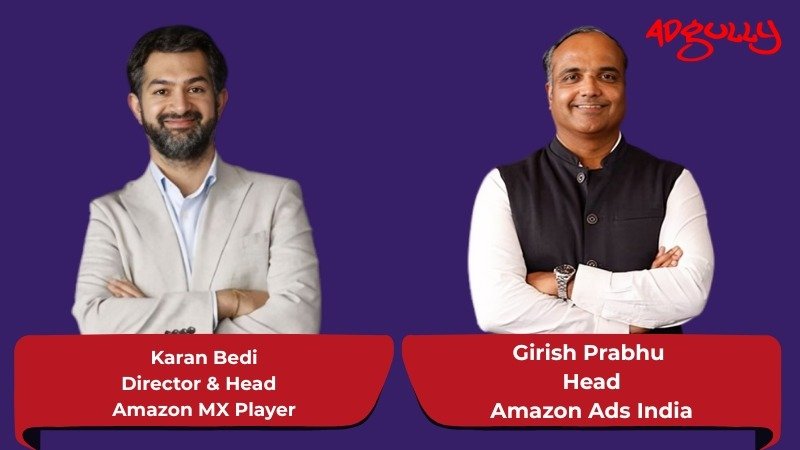
Girish Prabhu: Deeper integration, where brands are part of the story, is preferred. Our content creation cycles are much faster; we produce premium content in half the time. This allows us to offer great selection with higher frequency and unique integration levels. You can see major brands integrated into our shows.
Another aspect is precise messaging. The value of shopping signals and understanding household behavior is crucial for showing the right ad to the right customer at the right time. This applies when they are on Amazon properties (shopping app, Prime Video, MX Player, Alexa, Fire TV) and even when they are not, as we work with publishers across OTT and news. Our ability to provide wide, relevant reach to drive specific outcomes is differentiated. The objective is not just impressions, but driving the right outcome, like brand growth, increased sales, and acquiring new customers. We don’t focus on impression counts but on actual results.
What are the trends that you have witnessed recently, especially among the younger audiences?
Karan Bedi: A lot is happening. Since television has essentially moved to OTT, and digital is now the primary way people access TV, it has opened up new content types. As the old saying goes, “film is stories, TV is characters”. We’re seeing a lot more character-driven shows as core entertainment consumption shifts to digital platforms. This is the next evolution of entertainment; it’s mainstream now.
You’re seeing more experimentation and micro-genres. For example, we’ll be launching a long-running procedural legal drama next year, a homegrown Hindi show. In the reality space, you’ll see interesting, innovative shows. We are the only ones doing digital-first reality, which allows for significant innovation beyond simply airing an episode every evening. There’s much more you can do with captive reality that isn’t possible on television.
How is Amazon leveraging the intersection of content and commerce, especially across MX Player and Amazon platforms, to create seamless shoppable ad experiences for Indian consumers?
Girish Prabhu: The opportunity lies in enabling newer, direct-to-consumer (D2C) brands, which are popular with young shoppers, to access larger video formats. Traditionally, these brands relied on performance and search advertising. Amazon, MX Player, Prime Video, Fire TV, and other first-party properties allow us to take these growing brands (many of which grow on Amazon due to scale and timely customer reach) and expose them to consumers through video formats. Traditional television advertising is cost-prohibitive for many. We are breaking that barrier, allowing brands to reach relevant customers without needing to target the entire audience, and to spend what’s appropriate for their desired outcome. MX Player helps these brands drive awareness more effectively than other formats like search.
What role does Amazon’s rich consumer insight ecosystem play in shaping smarter, more personalized advertising on MX Player? How does it compare to traditional digital ad formats?
Girish Prabhu: We have aggregated insights into individual and household shopping behaviour over time, including product and brand choices, and consumption patterns during life stage events or festivals like Diwali. This understanding is made available to brands to reach the right consumers at the right time.
Our offering is outcome-focused, not just ad impressions. We prioritize the relevance of the message to consumers, which drives better outcomes. The value we bring is the ability to reach the right customers across all our formats.
What are the biggest shifts you are seeing in advertiser expectations today, and how is Amazon Advertising evolving its product offering to stay ahead of these demands?
Girish Prabhu: The biggest shift with digital is the superior ability to reach and deliver the right message compared to traditional advertising. Traditional advertising often relies on proxies, which are shortcuts when true understanding is lacking. For example, assuming men watch certain shows on national television between 8 pm and 10 pm is a proxy. Digital’s ability to be continuously up-to-date is appealing to advertisers, who are now eliminating these proxies and traditional media plans, which are inherently driven by such assumptions. Advertisers are looking for outcomes at a good price. This is what digital offers, and why platforms like Prime Video, MX Player, Fire TV, Alexa, and our shopping products are valuable. Ultimately, it’s about outcomes, not just impressions. We focus on the outcome driven by the advertising action and can tune this over time without relying on proxies.