

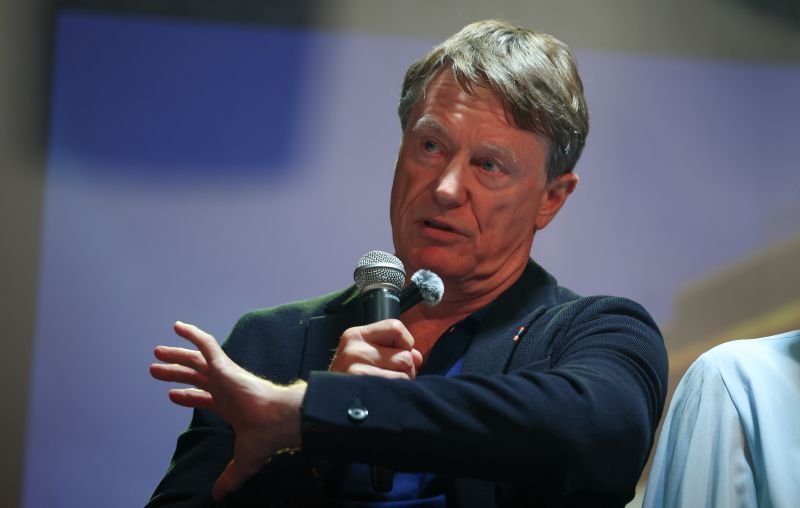
Former Psyche boss Steve Cochrane MBE has urged for decisive measures to draw both visitors and high-quality retailers back to Teesside’s town centres. He Tees Business LIVE event.
Organized in collaboration with Pneuma Group’s new upscale Middlesbrough sports bar, Pitch!, the event was hosted at the historic Middlesbrough Empire, which served as a striking venue for the conversation.
Moderated by Tees Business director Dave Allan, the panel also included retail consultant Graham Soult, Pneuma Group growth and relationships manager Jo Elliott, artist and retailer Lucy Pittaway, and ROAM visitor app founder Andrew Bartlett.
However, it was Steve—who spent decades at the forefront of Middlesbrough’s retail landscape—who provided one of the most definitive calls for a fundamental shift in how we define the modern high street.
“A high street is an ecosystem,” he said. “It needs to be a balance of leisure, of retail, of a nighttime economy. It needs to be all those things working together and interacting.”
While Steve acknowledges that the high street of the future cannot rely solely on retail, he maintains that securing a stronger shopping presence remains a vital component in restoring foot traffic.
He advocated for councils and landlords to consider aggressive incentives that could entice major brands back to towns like Middlesbrough.
“Why can’t we get together with the landlords and incentivise the likes of Mango or Zara or Fat Face to come here by giving them a year’s free rent and two years or three years free rates?” he asked.
Steve admitted that such a strategy carries inherent risk, but he argued that the initial businesses willing to invest in a struggling town centre are taking a gamble themselves and deserve to be rewarded for their commitment.
He proposed focusing on a select group of national retailers currently absent from Middlesbrough, offering them a proposition attractive enough to encourage them to commit.
“The first ones in are the ones taking the risk,” he said. “Maybe it should be ten stores, ten national chains that we haven’t got, that could be given an incentive where they can’t refuse – where it’s that attractive to them to take a risk.
“Then we’d get more critical mass of quality retail and that would bring more back into the town.”
Artist and retailer Lucy Pittaway believes that this dialogue must also involve government officials and property owners.
“The high street has a future if government and landlords can come together to provide some exciting opportunities for potential retailers,” she said.
Lucy noted that Middlesbrough requires a larger residential population in its centre, but she argued that drawing retailers back will necessitate targeted incentives and support.
“We shouldn’t sit here in denial that the high street is shrinking,” she said.
“We do need the people, but we also need some support from the likes of government and landlords to provide incentives for people to want to actually take the risk to come back into a town centre.
“I definitely think people and community are going to make a really big difference.”
For Graham Soult, one of the UK’s foremost high street consultants, the primary step is to abandon the narrative of terminal decline.
“The high street has a future if we stop telling people it’s dead,” he said. “Start with what’s already working and do more of it.”
Graham noted that businesses investing in town centres are deeply committed to their communities and consistently see the value in simply facilitating communication between local traders.
Recalling a recent workshop in Galashiels where business owners met for the first time, he remarked: “The power of a conversation – it sounds so obvious, but it’s really, really powerful.”
For Andrew Bartlett, however, the path forward must be guided by a deeper understanding of local community needs.
The ROAM app founder believes town centres can emulate successful online businesses by leveraging data to better understand their customers and customize their offerings.
He suggested that data points—such as visitor origins, modes of transport, dwell time, and subsequent journey patterns—could empower towns to make more informed decisions.
Ultimately, he believes the future hinges on a unified vision.
“The high street has a future if we recognise our cultural identity and we have a shared, joined-up approach towards a joint vision,” said Andrew.
Pneuma Group’s Jo Elliott, who serves on committees for the Turner Prize and Middlesbrough’s City of Culture bid, believes that shifting public perception is equally critical.
She highlighted Middlesbrough’s university, tech sector, cultural aspirations, and creative community as evidence of a narrative far more positive than the one often associated with the town.
“What do we actually tell about Middlesbrough?” she asked. “What do we tell about the town centre, the people, the passions there?
“It’s just telling the story the right way. So it’s collaboration with one voice. That’s what I would recommend.”
It was perhaps fitting that the discussion was held within the walls of the Middlesbrough Empire.
The 129-year-old structure has endured because it has adapted while preserving the unique character that defines it.
For Teesside’s high streets, the panel’s message was remarkably consistent.
Their long-term success will not be found by attempting to recreate the past.
Instead, it will depend on building spaces where people want to live, work, shop, dine, and enjoy experiences unavailable online—all supported by collaboration, action bold calls guru Retail
