

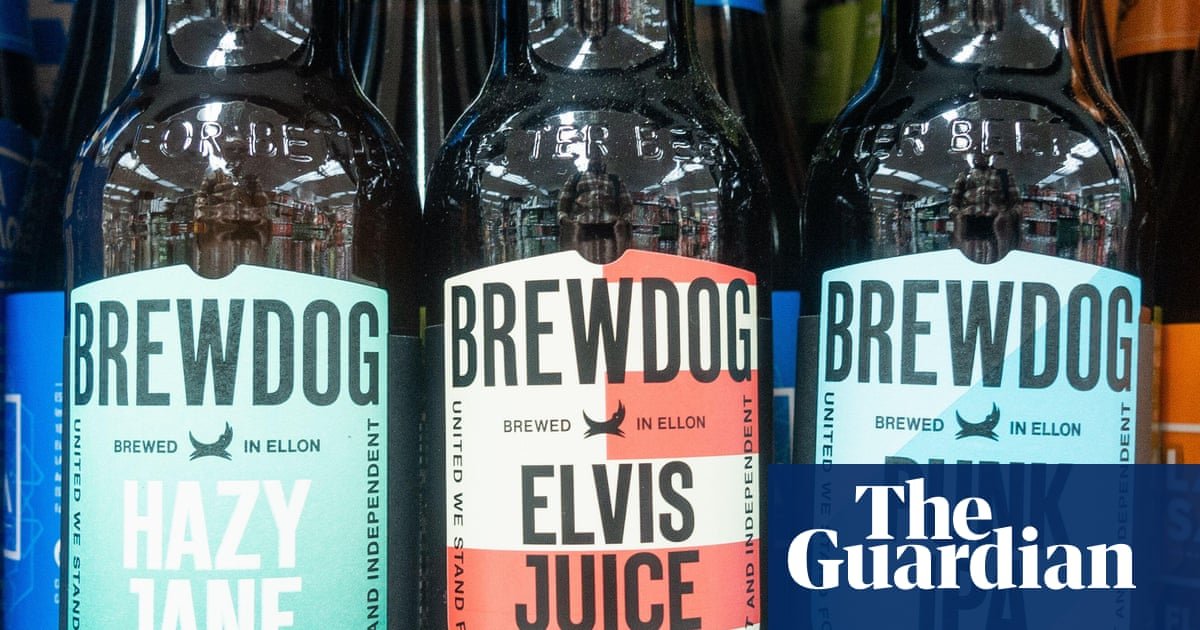
There are ‘insufficient funds’ to pay unpaid wages, tax owed to HMRC and overdue bills, accountants say
Accountants managing the liquidation of BrewDog, the “punk” beer brand that collapsed earlier this year, have stated that creditors owed approximately £190m will not receive full repayment.
In a progress update, administrators from AlixPartners cautioned that there were “insufficient funds” to cover outstanding debts, including unpaid wages, tax liabilities due to HM Revenue and Customs, and overdue invoices from various suppliers.
Earlier this year, the US-based cannabis and beverage firm Tilray acquired BrewDog’s brand, intellectual property, UK brewing facilities, and 11 bars in a rescue transaction valued at roughly £33m, finalized after the brewer entered administration.
However, the March agreement did not encompass the majority of BrewDog’s bar locations, resulting in the closure of 38 sites and the loss of 440 jobs.
The company’s failure rendered the investments of 200,000 “equity punks”—the small-scale investors who participated in the investment wiped out and will not recover debts totaling nearly £28m.
Lender HSBC is projected to recoup approximately £42m of the £61m it is owed.
James Watt, who co-founded BrewDog alongside his friend Martin Dickie in 2007, has previously stated that he was left “heartbroken” by the company’s collapse.
Watt’s tenure at the helm of BrewDog was defined by various controversies, including backlash over questionable marketing tactics and allegations of a “toxic” workplace culture, for which he issued an apology.
He has since established several new ventures, including Social Tip, a platform that compensates users for creating social media content about various brands.
After an unsuccessful attempt to repurchase BrewDog, he launched a new beer company called Second Best and offered former BrewDog investors free shares in the new entity.
However, several individuals who received these share offers filed complaints with the Information Commissioner’s Office, the data privacy regulator, expressing concerns that Watt had not legally obtained their contact information.
Watt has denied any wrongdoing.
