

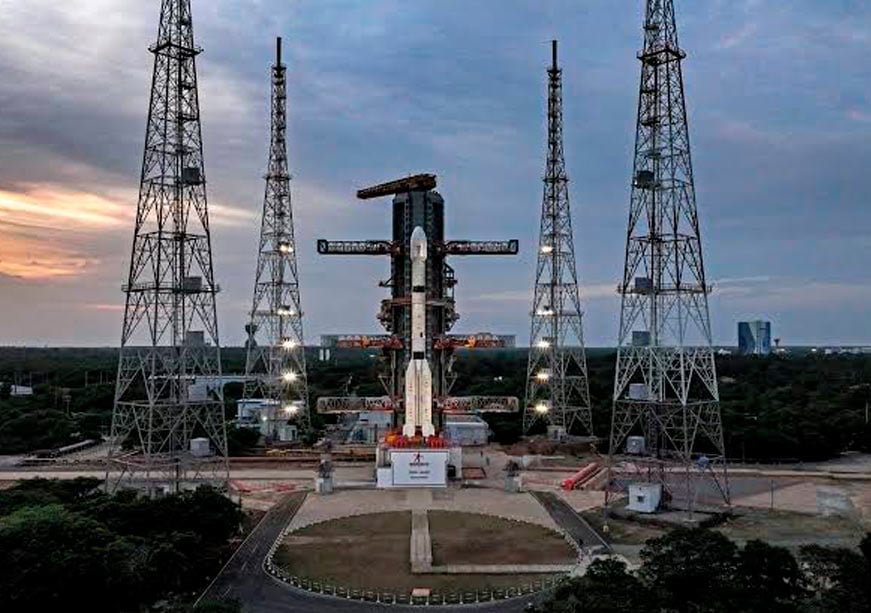
Indian space program planners fully recognize that they no longer possess the cost advantage that ISRO’s Polar Synchronous Launch Vehicle (PSLV) once held in the global market. SpaceX has emerged as a significant technological and economic disruptor, and there is a growing consensus that this shift compels Indian financiers, including venture capital firms, to recover lost ground. While restoring India’s launch cost per kilogram is a key metric, so is capitalizing on the immense economic potential offered by satellite miniaturization.
India is nearing the deployment of at least three small satellite launchers capable of commercial operations: Skyroot Aerospace’s Vikram-1, Agnikul’s Agnibaan, and the Small Satellite Launch Vehicle now managed by Hindustan Aeronautics Limited. These three vehicles are engineered to place payloads weighing between 100-500 kg into Low Earth Orbit (LEO).
A prevailing perspective, influenced by SpaceX’s capabilities, emphasizes the need for high launch frequency, lower costs per kilogram, and reusability. Another common assumption is that the market primarily favors mini-satellite operational lifespan, appropriate payloads for power, thermal <a s fundamental economic value in space resides downstream and not from just launch services. Globally, ground services account for roughly 40% of annual space revenue, while data analytics represent approximately 35%. India can only tap into this if it develops a robust downstream market, which depends on deploying its own satellite constellations.
To achieve this, India’s ideal scenario—the ‘Goldilocks Zone’—will be to deploy large, sustainable micro-satellite constellations with dedicated data users. While India may not be able to deploy thousands of mini-satellites similar to Starlink or Guowang using only three small rocket launchers, it can still establish significant micro-satellite constellations before the mid-2030s if it aims to become a comprehensive leader in the global space economy.
India certainly possesses both the launch and satellite manufacturing capabilities to reach this Goldilocks Zone. Now, it must act to achieve it.
Originally reported by www.orfonline.org. This article has been independently rewritten for republication.
