

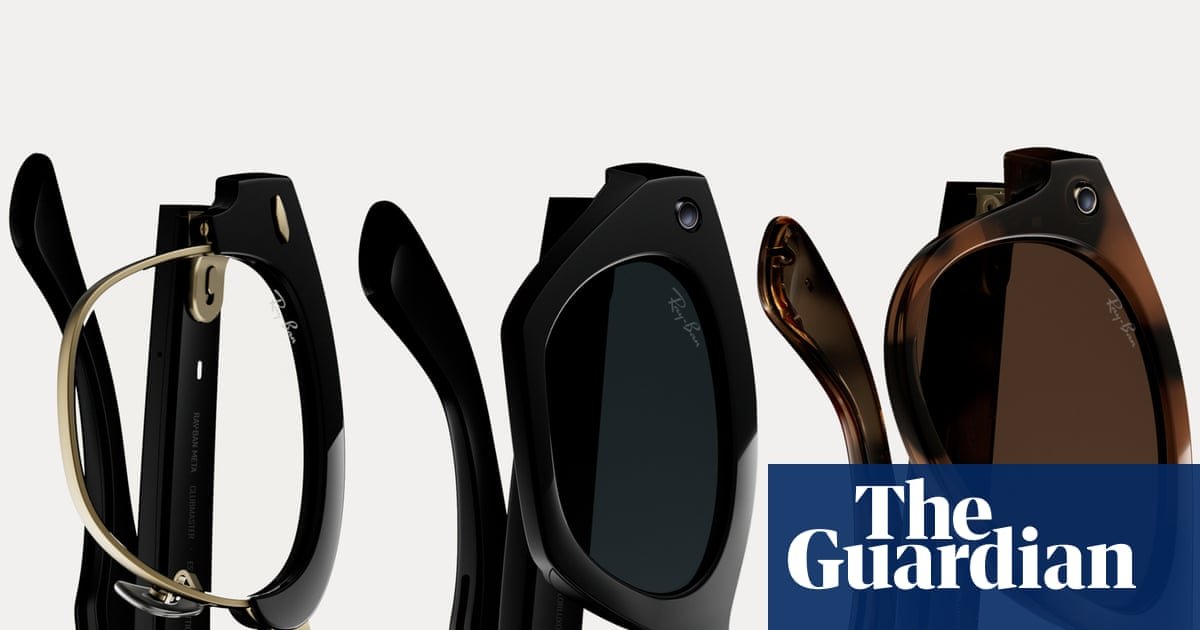
Meta announced an advanced new set of virtual reality glasses and a collection of new smart glasses on Wednesday, including an audio-only version that lacks a camera.
At the company’s Meta Connect conference in Menlo Park, development for several years. The glasses utilize microphones and speakers for music playback, phone calls, and interaction with the company’s AI assistant, while retaining the familiar aesthetic of Ray-Ban’s Clubmaster or Burbank designs. These new versions are lighter and thinner than their camera-equipped counterparts, offer up to 12 hours of battery life, and are priced at £319 (€349/A$529).
The new Ray-Ban Meta Gen 3 glasses, which do include cameras, feature improved battery life compared to previous models, lasting up to nine hours and supporting Dolby Atmos audio. They will retail for £409 (€449/A$679). Meta is also introducing two new styles of its own-brand glasses in collaboration with singer and actor Lisa. All of the company’s smart glasses feature an LED indicator that flashes during recording, but Meta stated it has enhanced its tampering detection, including during livestreaming sessions.
Finally, Meta is expanding the availability of its Meta Ray-Ban Display smart glasses to markets outside the US for the first time since they were announced a year ago. The glasses, which feature a virtual display in the right lens, will be available in the UK and Canada starting September 23 for £749 (CA$1,149), with a subsequent rollout in France, Germany, and Italy on October 13 for €899.
Meta VR glasses
The new Meta VR glasses represent an evolution of the company’s pioneering Quest VR headsets, which have become among the most popular on the market. Rather than a bulky plastic headset, this 100g device is constructed from magnesium alloy and resembles an oversized pair of glasses. The wearer views content through small lenses onto a 5K microOLED screen with a crisp 37 pixels per degree, providing sharp text that rivals Apple’s high-end Vision Pro headset. Users can see out of the sides and through a front-facing camera system, allowing for augmented reality features and awareness of their environment.
The glasses are connectedg hardware and a three-hour battery pack. This design helps reduce weight on the user’s head, making the glasses five times lighter than the Quest 3 headsets
The glasses are fully compatible with the extensive Quest software library, though they are primarily intended for productivity and entertainment rather than gaming. The company described the glasses as “IMAX Enhanced” and capable of supporting 3D movies. At launch, they will feature a new Disney+ immersive experience that surrounds a virtual cinema screen with landscapes from films such as Avengers: Infinity War.
The glasses have the capability to display multiple virtual windows and can connect to a Mac or PC to mirror their displays. They feature eye-tracking and hand-gesture controls, including a virtual keyboard projected onto any desk or table, while also supporting Quest hand controllers or an Xbox game pad for gaming.
The Meta VR glasses will cost $1,299.99 and are scheduled for release in spring 2027 across North America, Europe, and Asia.
