

From Vision to Action: Unlocking a New Paradigm for the Intelligent Economy
On September 17, Huawei hosted the Fifth Digital Economy Development Forum, gathering global digital strategy makers, industry experts, and representatives from academia, industry, and research sectors to explore the evolution of the digital economy in the age of AI.
During the forum, Huawei provided comprehensive insights into AI technologies and trends aligned with the “Intelligent World 2035” vision, aiming to encourage nations to proactively invest in digital and intelligent infrastructure while expanding the ICT infrastructure market.
[Shanghai, China, September 17, 2026] Huawei held the Fifth Digital Economy Development Forum in Shanghai as part of HUAWEI CONNECT 2026. The event convened global digital strategy makers, industry experts, and representatives from academia, industry, and research to examine emerging AI investment in digital and intelligent infrastructure is projected to increase by 19% annually over the next five years, with AI expected to contribute more than US$27 trillion to the global economy.
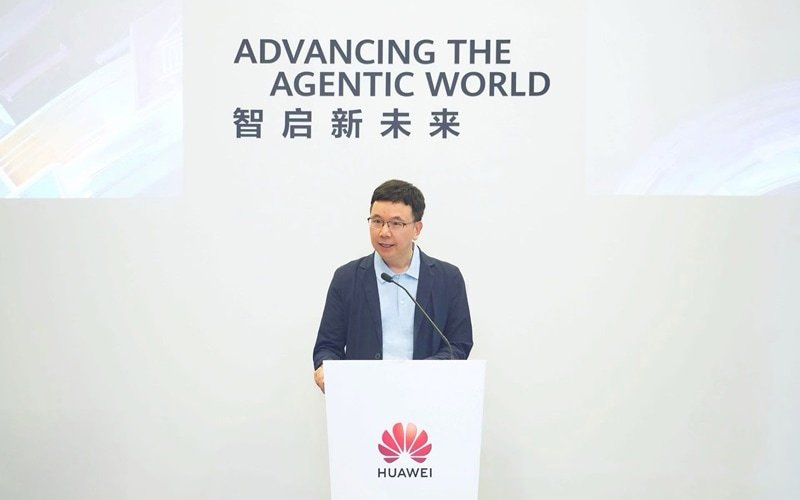
Many governments and industry leaders are evaluating the challenges and opportunities presented by these shifts and are developing strategies to bolster their local digital economies. Yang Chaobin, Huawei’s Executive Director of the Board and CEO of the ICT Business Group, opened the forum by stating, “We need to use AI breakthroughs and focus on tailored industry policies, forward-looking infrastructure, and an AI talent ecosystem to drive social and Other speakers at the event included Wang Yuntao, Deputy Chief Engineer of the AI Institute at the China Academy of Information and Communications Technology (CAICT), and Otthein Herzog, a member of the National German Academy of Science and Engineering. Both industry leaders shared their perspectives on the AI strategies and development roadmaps of China and Germany, respectively. Wang emphasized that China’s AI development extends beyond merely creating better models. The nation is also leveraging its vast domestic market and industrial strengths to integrate AI across diverse sectors, using successful intelligent transformation pilots to catalyze technological innovation. Furthermore, China is utilizing high-level design, policies, and regulations to promote sustainability within its intelligence industry. Professor Otthein Herzog said, “Germany launched its AI strategy in 2019 as it identified AI’s massive benefits to society, aiming to drive AI growth and make it trustworthy.” He noted that Germany will implement a series of pragmatic measures to achieve this, including fostering interdisciplinary dialogue and research to consolidate collective insights; expanding computing infrastructure through four AI service centers to support innovation; and participating in international AI governance and standardization efforts to translate AI into tangible benefits and economic opportunities, ensuring that technological advancements serve the public good. Liu Mingju, the director of Huawei’s ICT Marketing Operations Department, noted that the large-scale commercial adoption of agentic AI requires more robust digital and intelligent infrastructure. This is creating a powerful synergy between connectivity and computing, which is expected to drive hundredfold growth per decade. Regarding the planning of digital and intelligent infrastructure, she stressed that increased compute resources, higher compute efficiency, and an AI-centric communications network are essential to making intelligence ubiquitous. Since its launch in 2023, Huawei’s Digital Economy Development Forum has acted as an international platform for government and industry leaders to identify new opportunities for digital and intelligent economic growth. This year’s event focused on leveraging AI to accelerate that progress. Other participants discussed the transition of the digital economy from isolated technological breakthroughs to a model of diversification and collaboration. This shift underscores the necessity for systematic, holistic planning in AI infrastructure and talent development, alongside local policies designed to support human well-being and a sustainable digital economy. Themed Advancing the Agentic World, HUAWEI CONNECT 2026 explores AI across three dimensions: strategy, technology, and ecosystems. Attendees can expect an in-depth look at new strategic initiatives, as well as the unveiling of updated digital and intelligent infrastructure products, industry-specific solutions, and development tools. The event runs from September 17 to 19 at the Shanghai World Expo Exhibition & Convention Center and the Shanghai Expo Center. Q1: What are the major factors influencing digital economic growth in the AI era? The 2026 edition of the Global Digitalization and Intelligence Index (GDII) outlines a new growth function observed within the intelligent economy. This function is driven by four primary factors: policy, data, technology, and talent. Q2: What are the key areas of action for building digital and intelligent infrastructure in the AI era? At the computing system and software level, the SuperPoD architecture is recommended to address rising computing needs and diverse workload demands. At the networking layer, ultra-high bandwidth, multi-band coordination, intelligent scheduling, and task-level SLA assurance are becoming increasingly critical. These features will help maximize the potential of mobile communications networks by serving as ubiquitous connectivity infrastructure that supports real-time agent collaboration, edge-cloud inference, and intelligent production. Originally reported by www.huawei.com. This article has been independently rewritten for republication.Wang Yuntao speaking at the Fifth Digital Economy Development Forum
Otthein Herzog speaking at the Fifth Digital Economy Development Forum
