

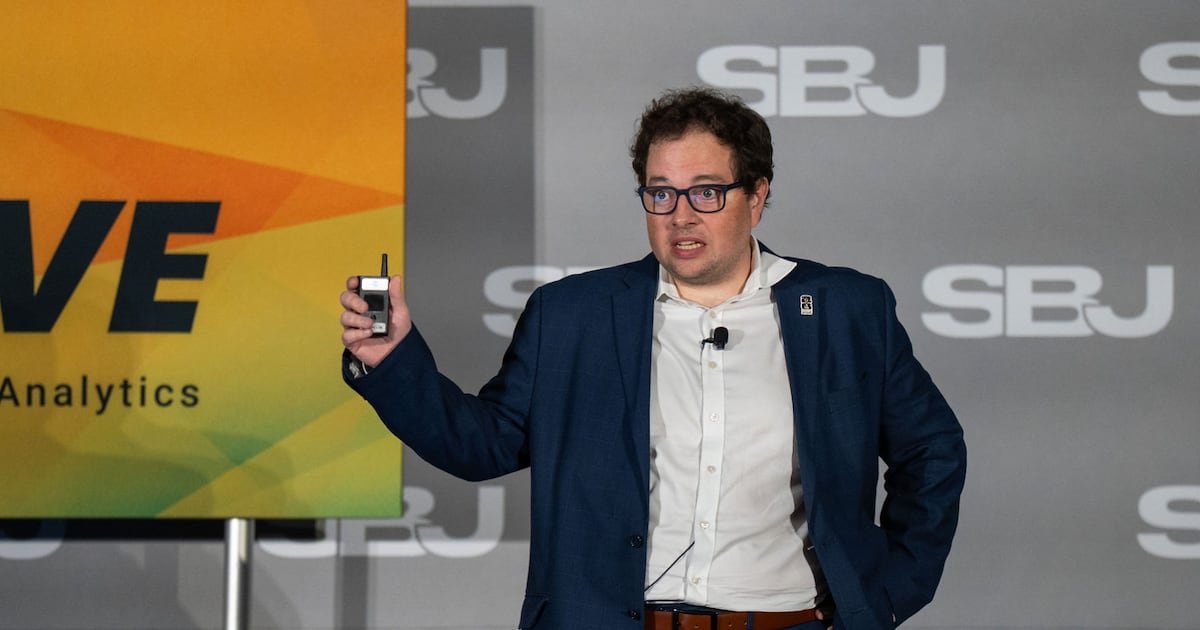
Caio Dimov, Head of business data. As FIFA assumed direct oversight of venue operations, commercial activities, and revenue streams, the organization required a system capable of delivering actionable insights in real time rather than relying on post-event summaries.
This initiative resulted in a data hub aggregating information from over 45 sources, including ticketing, parking, turnstiles, food and beverage, finance, hospitality, and internal soccer operations. According to Dimov, FIFA generated more than 35 dashboards for executives, venue staff, and commercial partners, processing over 70 million data points and 15 million financial transactions. He stressed, however, that the objective was not merely to collect data, but to utilize information to actively refine tournament operations as they occurred.
The system yielded immediate practical benefits. For instance, when parking data revealed that certain fan groups were purchasing excessive bus passes, FIFA adjusted capacity at specific venues. In another instance, when a partner’s promotional giveaway caused congestion, FIFA coordinated with concessionaires to deploy hawkers nearby, simultaneously boosting revenue and improving the fan experience. Commercial partners were also provided with dashboards tailored to their specific services, offering a mix of live data and post-match analysis.
Dimov noted that fan arrival patterns were among the biggest surprises. Unlike many North American sporting events where spectators often arrive near or after kickoff, FIFA observed that 99% of fans were inside the stadiums before the start of “virtually every match,” with 90% in their seats 30 minutes prior to kickoff. Furthermore, the tournament’s fully cashless environment provided FIFA and its partners with a clearer view of transaction trends.
The primary hurdle, Dimov explained, was the tournament’s opening phase, as the first match at each venue served as a high-stakes stress test. Integrating various vendors, point-of-sale systems, and stadium infrastructures required constant fine-tuning during the busiest stretch of group play.
For FIFA, this project establishes a framework for future events, including the 2027 Women’s World Cup in Brazil and the 2030 men’s World Cup in Portugal, Morocco, and Spain. Dimov noted that the model will be tailored to specific markets and vendor capabilities, while AI could assist FIFA in accelerating the transformation of live event data into usable insights.
“Processing that data and coming up with the insights in a faster way, in a seamless way, I think that’s one. Working with our loyalty program, with our CRMs, integrating that side of the business with the live event is something that we didn’t necessarily do that much.”
Dimov added, “Combining our FIFA rewards or FIFA loyalty program with what happens in the events, I think that’s something that we can digest that data and combine with this data to get some more predictive analytics.”
