

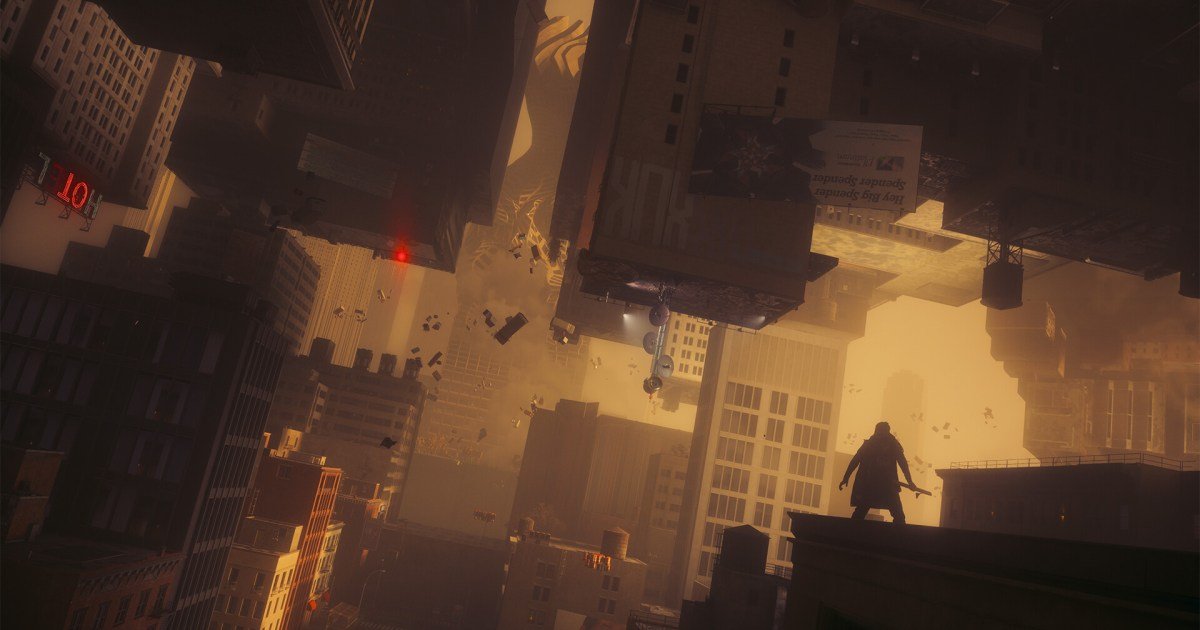
Control Resonant is a bold sequel that fails to hit the mark. By swapping its signature firearm for melee-focused combat and shifting the protagonist role to Jesse’s brother, the game takes a significant gamble. While the art direction and select narrative beats remain impressive, the transition from a celebrated shooter to a lackluster character-action title—one that seems unsure of its own identity—proves to be a difficult adjustment.
The narrative stands out as the most frustrating aspect of Control Resonant. Centering the story on a character who is widely distrusted and disliked is a daring choice that yields some compelling early moments. Unfortunately, these intriguing plot developments unfold at a glacial pace, and players are forced to endure the same repetitive dialogue regarding the discovery of fallen soldiers far too often. What could have been a tight 15-hour narrative is stretched to double that length, causing the story to lose its momentum rapidly.
The primary issue, however, is that the combat feels unrewarding. While the decision to forgo a parry mechanic is an inspired choice that I appreciate, the dodge alone fails to provide sufficient depth. The game suffers from a lack of combo variety and a frustrating inability to execute satisfying attacks while cycling through powers and weapons. Instead, you are forced to rely on basic combos to survive overly long encounters against sponge-like enemies that require far too many hits to defeat. This is no Devil May Cry; the combat is the most disappointing element of a game that forces you into constant skirmishes.
It doesn’t help that the game has abandoned an engaging Metroidvania-style map in favor of a bland, open-world rendition of New York City. You are tasked with completing the same objectives repeatedly, such as activating map beacons upon entering each new zone, which makes for an uninspired world. The game suggests a more open mission structure than it actually delivers, as you frequently require specific mobility upgrades to progress, leaving you to traverse a dull cityscape filled with uninteresting monsters. While you might occasionally encounter something unique, like a cursed bus, most enemies are generic and tedious to battle.
Despite my numerous criticisms of Control Resonant, I want to avoid being overly negative. There are still instances where Remedy manages to impress. From visually stunning, trippy story sequences to beautifully designed bosses, there is a great game buried here. It is simply too bloated and hampered by a combat loop that is too simplistic to truly shine.
Control Resonant (PS5) Review: Final Verdict
Control Resonant is not a bad game, but it fails to be the successor that fans of the original were hoping for. While Remedy’s tendency to zig when players expect a zag is usually one of the studio’s greatest assets, this is one of the rare occasions where that approach has not paid off. Repetitive combat that lacks depth, a dated open-world environment, and a lackluster story fail to capture the magic of the first entry.
